Heart/Inflammation/Mood
Omega-3
EPA/DHA fats from fish or algae that lower triglycerides and may support heart and inflammatory health in adults with low fish intake.
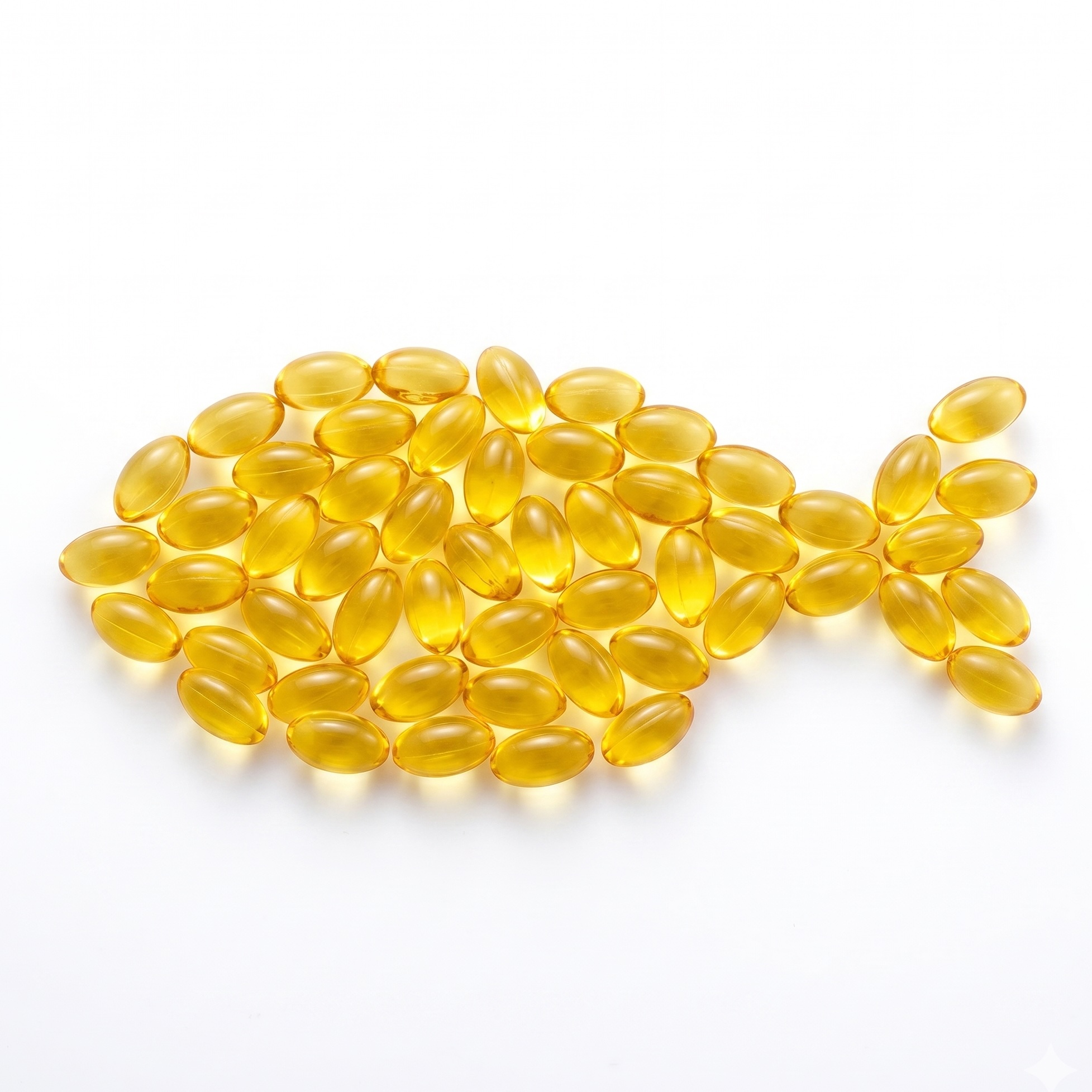
Omega-3
EPA/DHA fats from fish or algae that lower triglycerides and may support heart and inflammatory health in adults with low fish intake.
100
A
evidenceSafe
riskProven Benefits
01Lowers triglycerides
02Modestly lowers blood pressure
03Modestly lowers CV event risk
04Reduces depressive symptoms
05Lowers CRP and IL-6
06May ease joint pain/stiffness
07May improve dry eye symptoms
Chemical Forms
Recommended
- Re-esterified triglyceride fish oil
- Triglyceride fish oil
- Algal oil (DHA or DHA/EPA)
Avoid
- Ethyl ester fish oil (less absorbable without a fatty meal)
- Flaxseed oil / ALA-only products (poor conversion to EPA/DHA)
Expert Note
Triglyceride and re-esterified triglyceride forms generally absorb better than ethyl esters, especially if taken without a high-fat meal. Algal oil provides preformed DHA, and some products also provide EPA, making it the best vegan option. ALA-only oils are not equivalent because conversion to DHA is very low.
Protocol
Amount
1000-2000 mg EPA+DHA
Frequency
Once daily or split into 2 doses with meals
When
With a meal containing fat; this matters most for ethyl ester forms.
Condition-Based Dosing
Adults eating little or no fatty fish
500-1000 mg EPA+DHA daily
Low omega-3 index (< 4%)
1000-2000 mg EPA+DHA daily for 8-12 weeks, then retest
Fasting triglycerides elevated
2000-4000 mg EPA+DHA daily under clinician guidance
Vegetarian or vegan adults
300-600 mg DHA daily or 500-1000 mg DHA+EPA from algal oil
Safety & Limits
Upper Safe Limit
Up to 5 g/day combined EPA+DHA appears safe in adults (EFSA; no formal UL)
Cycling
Safe for continuous use
Contraindications
Anticoagulants or antiplatelet drugs — higher doses can increase bruising or bleeding risk
Atrial fibrillation history — high-dose EPA/DHA may increase recurrence risk in some adults
Fish or shellfish allergy — choose algal oil instead of fish-derived products
Upcoming surgery — discuss doses above 1 g/day with a clinician
Avoid Combining With
- ✕Orlistat or fat-blocking drugs (reduce absorption — separate and ask a clinician)
- ✕Ethyl ester fish oil on an empty stomach (lower absorption — take with a fatty meal)
- ✕Rancid or poorly stored oil (oxidation reduces quality — keep cool, sealed, and away from light)
Updated Invalid Date