Protein
Widely researched sports nutrition supplement providing amino acids to support muscle synthesis, recovery, body composition, and satiety.
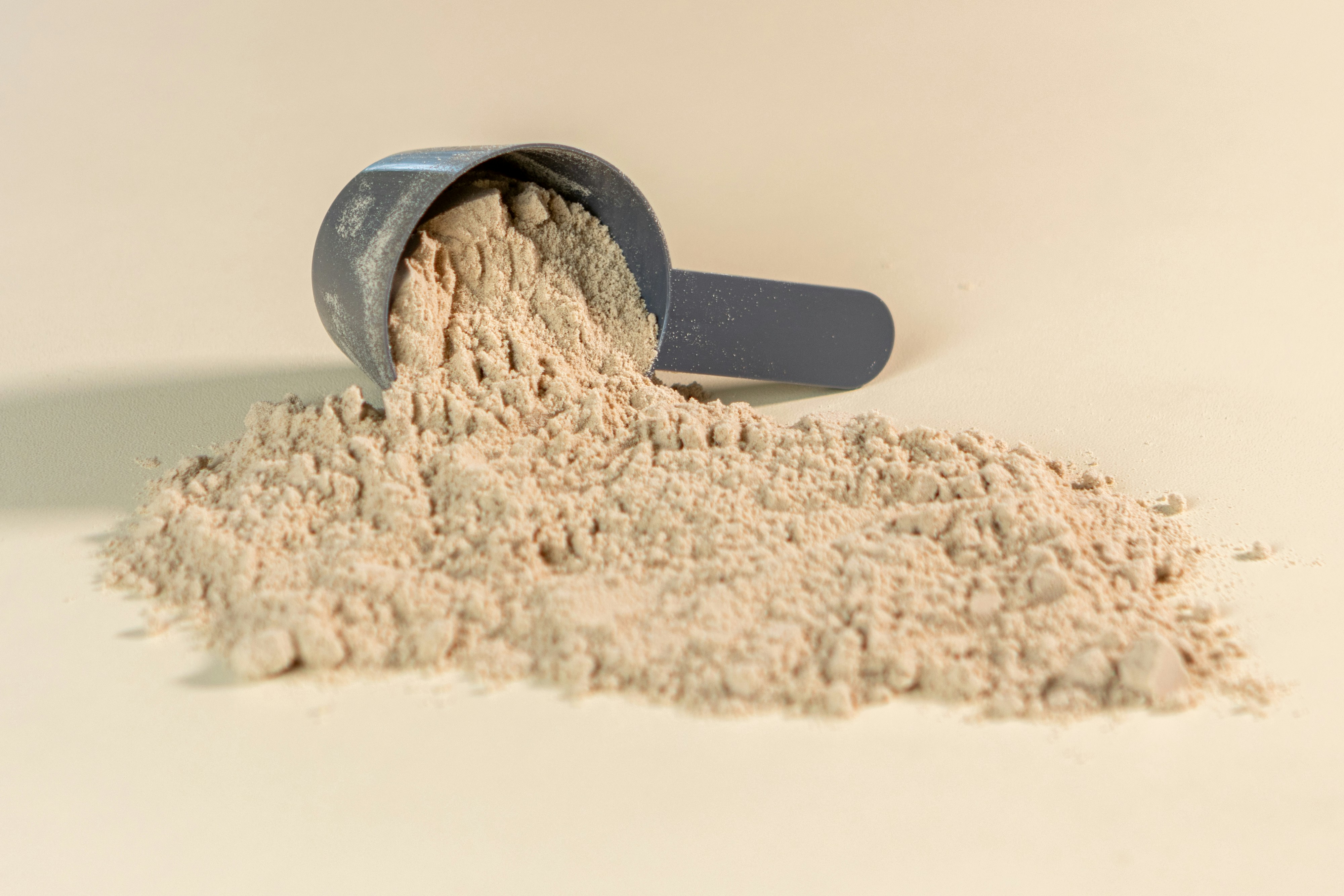
Protein
Widely researched sports nutrition supplement providing amino acids to support muscle synthesis, recovery, body composition, and satiety.
Proven Benefits
Chemical Forms
- Whey protein isolate (WPI, ~90% protein, low lactose)
- Whey protein concentrate (WPC, ~70-80% protein)
- Pea + rice protein blend (complete amino acid profile)
- Micellar casein (slow-release, overnight)
- Proprietary blends with undisclosed ratios
- Products with excessive added sugars (>5 g/serving)
- Amino spiked formulas (inflated protein claims)
Whey protein isolate is highly pure, rapidly absorbed, and low in lactose. Concentrate retains bioactive fractions at a lower cost. Pea and rice blends match whey's amino acid profile when leucine is balanced. Micellar casein clots in the stomach for slow release. Avoid proprietary blends, excessive added sugars, and amino-spiked formulas that inflate protein claims.
Protocol
Condition-Based Dosing
Safety & Limits
Contraindications
Synergies
Complementary mechanisms: protein for muscle protein synthesis, creatine for ATP and cell hydration
Vitamin D supports muscle function and protein utilization
Key mTOR activator; useful to boost plant-based protein's anabolic signal
Avoid Combining With
- ✕Excessive fiber at same meal (may slow protein digestion)
- ✕Alcohol (impairs muscle protein synthesis and recovery)
- ✕Very high single doses >40 g (diminishing returns for MPS per meal)