Vitamin D
Fat-soluble vitamin that corrects low vitamin D status and supports bone and immune health in adults with low sun exposure.
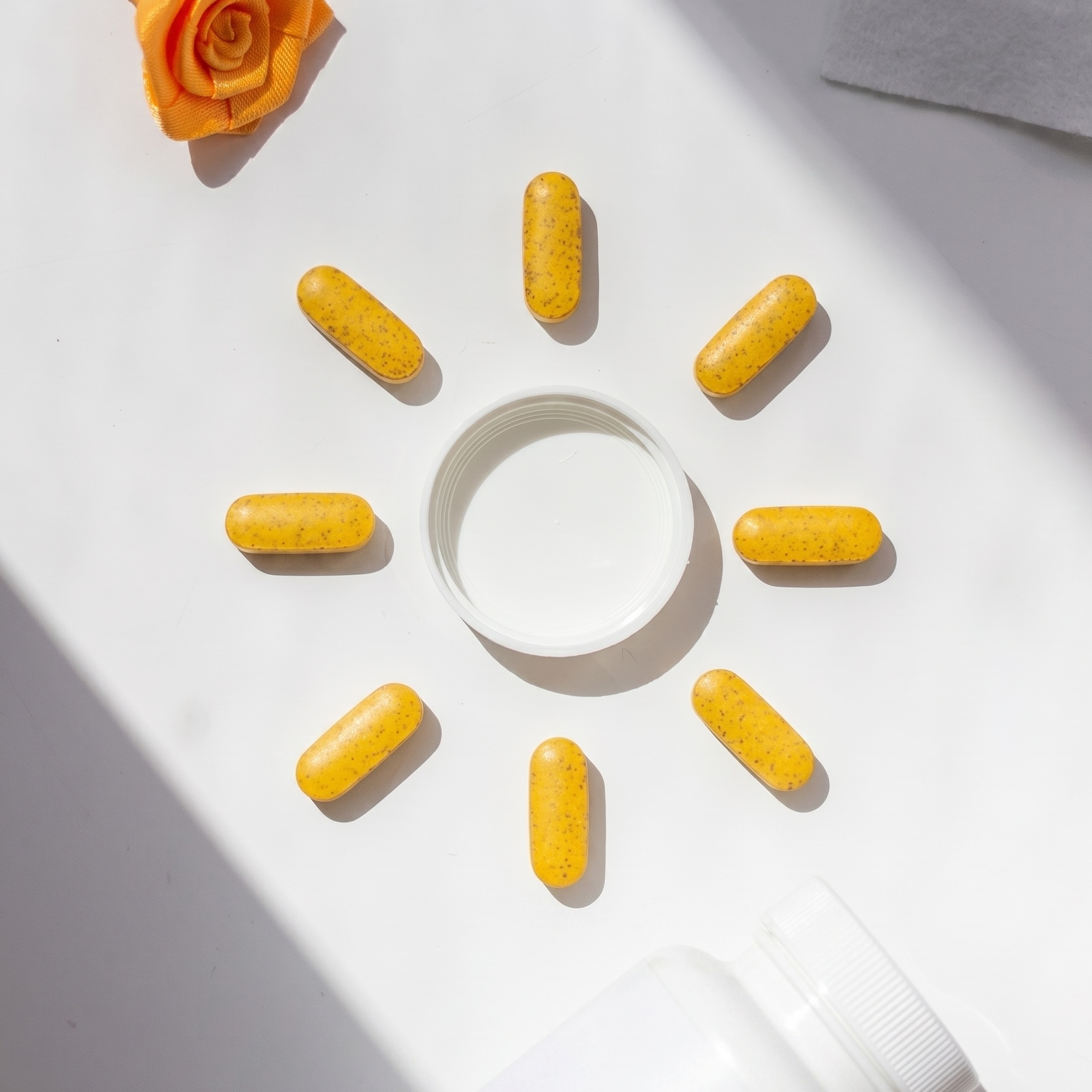
Vitamin D
Fat-soluble vitamin that corrects low vitamin D status and supports bone and immune health in adults with low sun exposure.
Proven Benefits
Chemical Forms
- Vitamin D3 (cholecalciferol)
- Vitamin D2 (ergocalciferol) — often raises 25(OH)D less effectively
D3 is the form your skin makes and the best-studied retail supplement form. Head-to-head trials generally find it raises and maintains 25(OH)D better than D2, so it is usually the more reliable choice for routine supplementation.
Protocol
Condition-Based Dosing
Safety & Limits
Contraindications
Synergies
Magnesium is required for the enzymes that activate vitamin D; low magnesium can blunt the rise in and effects of vitamin D.
Vitamin K2 helps activate proteins that direct absorbed calcium into bone rather than soft tissue, especially during long-term vitamin D use.
If dietary calcium is very low, vitamin D cannot fully improve calcium balance or bone mineralization.
Avoid Combining With
- ✕Orlistat (reduces fat absorption — separate by 2+ hours)
- ✕Bile acid sequestrants like cholestyramine (reduce absorption — separate by 4+ hours)
- ✕Very low-fat meals (can reduce absorption of fat-soluble vitamin D)
- ✕Anticonvulsants like phenytoin or carbamazepine (increase vitamin D breakdown)
- ✕Mineral oil laxatives (reduce fat-soluble vitamin absorption)